Projects
Ankyrin-1 complex
The ankyrin-1 complex is essential for maintaining the characteristic biconcave disc shape of erythrocytes and the exceptional deformability and gas exchange properties of the erythrocyte membrane. It achieves this by tethering the spectrin-actin cytoskeleton to the red blood cell membrane, and acting as a metabolic hub that connects membrane proteins involved in gas exchange, pH control, and regulation of cellular volume and deformability. Our structure (Vallese et al. 2022) of the ankyrin-1 complex has provided critical insights into the molecular mechanism by which ankyrin mediates membrane protein organization, but fundamental questions remain unanswered. For example, how do the specific protein-protein interactions that occur within the ankyrin-1 complex contribute to its function?
To answer to these questions, in my laboratory, I will expand on my initial structural investigations to obtain a comprehensive understanding of ankyrin complex architecture, dynamics, and regulation. I will employ a combination of structural and functional approaches to explore both the role of the ankyrin-1 complex in the erythrocyte’s membrane curvature and its function as a metabolic hub involved in the diffusion of CO2 across the membrane.

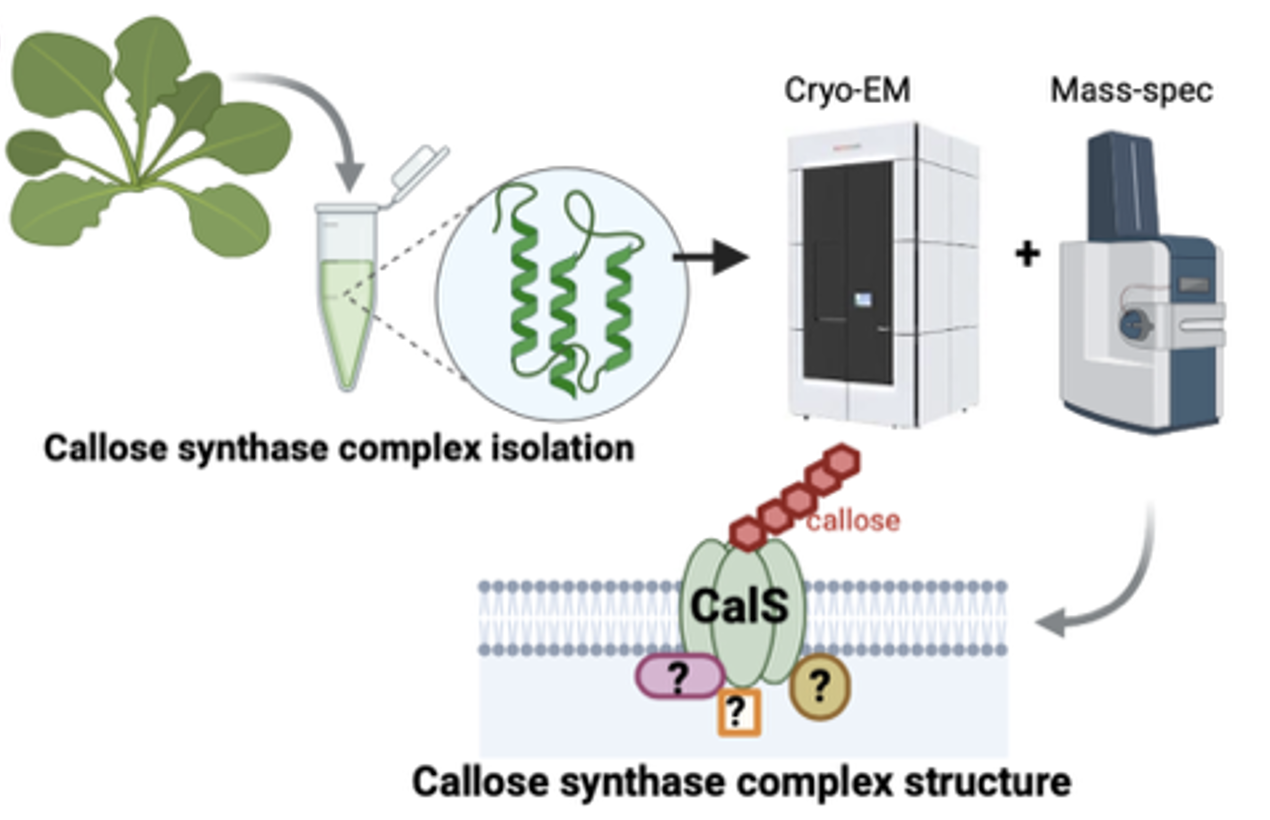
Callose synthases are membrane-embedded enzymes that assemble into a plasma-membrane complex to produce callose, a structural sugar that plants deposit as a quick, reversible cell-wall component. CalS complex is central to plant development and stress physiology, contributing to cell division, vascular tissue and pollen development, cell-to-cell communication, and rapid wall reinforcement against pathogens and abiotic environmental stress. Despite this central role, the protein structure, complex composition, and regulatory partners of the native CalS3 complex remain unknown.
The Vallese Lab, in collaboration with the Zumajo Lab at the New York Botanical Garden, is working to define the precise composition and architecture of the CalS complex in native plant membranes and to identify the regulatory proteins and lipid cofactors that govern its assembly and activation. A central focus is understanding how the complex differs between its resting and stress-activated states and resolving these differences at the molecular level. Ultimately, this native structural and regulatory framework aims to inform strategies for engineering plants with more resilient stress responses. To pursue these goals, the Lab combines native membrane biochemistry, proteomics, plant biology, and structural biology in a multidisciplinary approach.
The Callose Synthase complex
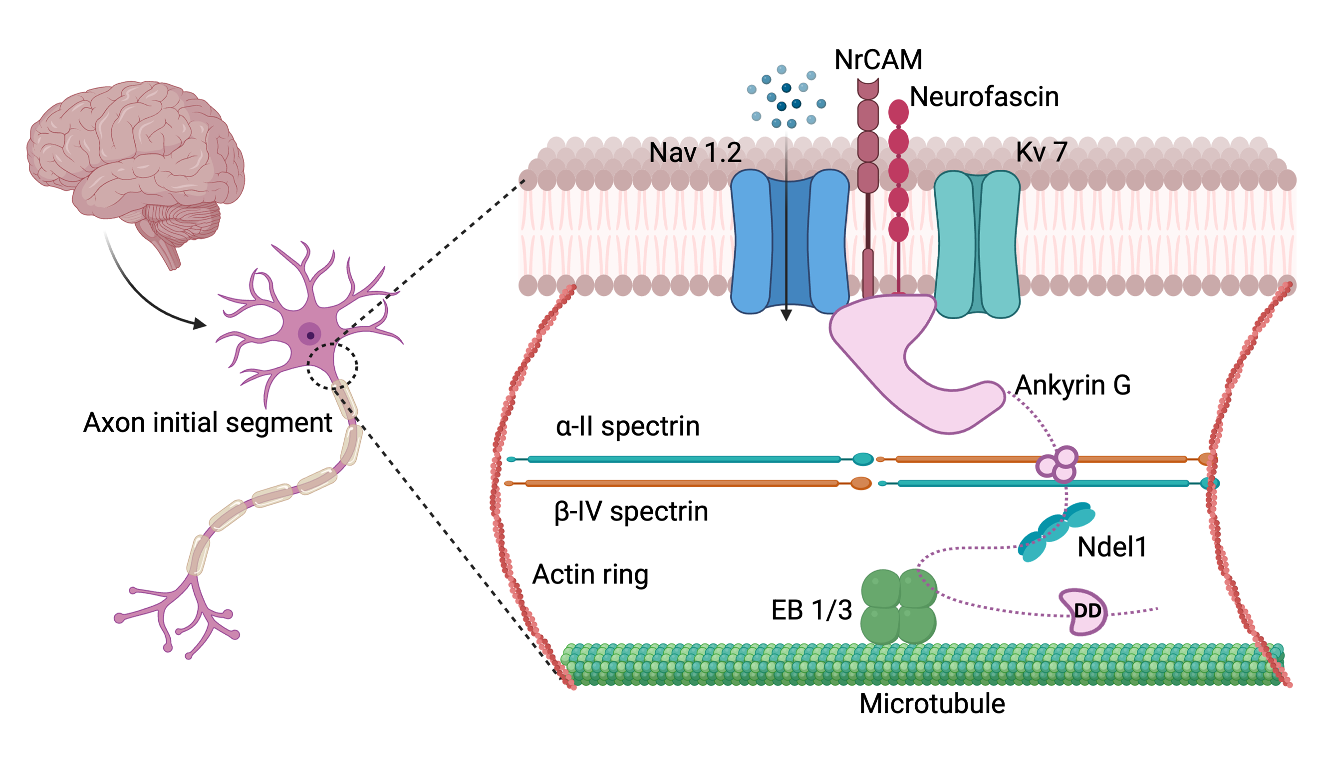
Neurons possess the remarkable ability to generate and propagate electrical signals with precise directionality. At the axon initial segment (AIS), ankyrin-G plays a central role in organizing a highly specialized molecular microdomain by clustering voltage-gated ion channels, cell adhesion molecules, and the spectrin–actin cytoskeleton. Disruptions in ankyrin-G function have been linked to neurological and neurodevelopmental disorders, including autism spectrum disorder, bipolar disorder, and epilepsy. Exploring the structure and function of ankyrin complexes in neurons is crucial not only for understanding their role in brain physiology but also for informing therapeutic advances.
In the Vallese Lab, we are investigating the native ankyrin-G complex in neurons to address three fundamental questions: What are the binding partners of native ankyrin-G complexes in neurons? How are these components organized in three-dimensional space to form a functional molecular complex? How does the organization of the ankyrin-G complex change during neuronal injury and disease-associated states? We combine hardcore biochemical approaches with cutting-edge, high-resolution structural techniques to answer these questions.
The neuronal Ankyrin-G Complex